How to Renovate My Patio Decoradhouse for a Stylish and Comfortable Outdoor Retreat


How to renovate my patio decoradhouse with smart planning, better layout, cozy furniture, layered lighting, plants, textures, and lasting style for a functional outdoor retreat.


When people search for how to renovate my patio decoradhouse, they are usually not asking for a basic checklist. They want a patio that feels better, looks more polished, and actually works for daily life. They want the space to feel welcoming in the morning, practical during the day, and relaxing in the evening. They want it to look finished without feeling stiff. Most of all, they want an outdoor area that reflects their taste instead of looking like an afterthought.
That is exactly what a successful patio renovation should do. A patio is not just a slab of concrete, a few chairs, and a plant in the corner. It is an extension of the home. It can become a reading area, a family hangout, a quiet coffee spot, a weekend entertaining zone, or a peaceful place to unwind after work. The best results happen when you stop thinking only about decor and start thinking about atmosphere, comfort, layout, and durability all at once.
If you have been wondering how to renovate my patio decoradhouse in a way that feels smart, modern, and personal, the process begins with intention. A good patio does not happen by accident. It comes from clear planning, strong materials, thoughtful styling, and details that support how you actually live. This guide walks through the entire process in a simple, readable way while still giving you expert-level direction. By the end, you will know how to shape your patio into a space that feels complete, balanced, and beautifully livable.
Why Patio Renovation Matters More Than Most Homeowners Realize
Many homeowners focus first on kitchens, bedrooms, and living rooms because those spaces feel essential. The patio often gets pushed aside because it is outside, and outside spaces are easy to ignore when life gets busy. But the truth is that a neglected patio can quietly affect how your whole home feels. When the outdoor area is messy, outdated, or underused, it creates a gap in the home experience. That gap becomes obvious once you finally improve it.
A well-renovated patio changes the emotional value of your home. It gives you extra usable space without needing a full addition. It creates visual continuity between indoors and outdoors. It makes gatherings feel easier. It gives you a better relationship with natural light, fresh air, and seasonal living. Even a modest update can make the property feel more complete and more intentional.
This is one reason the phrase how to renovate my patio decoradhouse has become such a useful design question. It suggests more than replacing furniture. It suggests creating a patio that is curated, livable, and expressive. Instead of treating the patio like a leftover zone, you begin treating it like a designed environment with purpose. That shift in mindset is what leads to truly impressive results.
A patio renovation also gives immediate satisfaction. Unlike some interior upgrades that hide behind walls or plumbing, patio improvements are visible right away. You see the change every time you step outside. You notice how the light hits new finishes, how the seating arrangement invites conversation, and how the textures soften the hardscape. That instant transformation is one of the biggest rewards of outdoor design.
Starting With the Real Condition of Your Patio
Before choosing colors, furniture, or decorative accents, you need to understand what you are working with. This part is less exciting than shopping, but it is what separates a quick refresh from a renovation that actually lasts. If the structure of the patio is weak, cracked, poorly drained, or awkwardly shaped, surface-level improvements will only disguise problems for a short time.
Walk through the patio slowly and examine everything. Look at the flooring. Is it cracked, uneven, faded, stained, or slippery? Notice the edges and transitions. Do they feel smooth and intentional, or harsh and unfinished? Check how rainwater behaves. Does it drain away properly, or does it collect in puddles? Look at nearby walls, fences, and steps. Are they stable and visually compatible with the rest of the house?
Then assess how the patio currently functions. Is it too small for the way you use it? Are there pieces blocking movement? Does the layout make conversation difficult? Is there enough shade during hot weather? Does the space feel exposed, empty, cluttered, or disconnected from the house? These questions matter because they reveal what the renovation actually needs to solve.
When people ask how to renovate my patio decoradhouse, they often think the answer starts with style. In reality, it starts with diagnosis. Style is important, but function always comes first. A beautiful patio that overheats, puddles, or feels cramped will never feel complete. The best design choices are rooted in what the space truly needs, not just what looks good in a photo.
Defining the Purpose Before the Design
The fastest way to waste time and money in patio renovation is to design without deciding how the space should serve you. Outdoor spaces can be many things, but they do best when they have a clear primary role. A patio used for quiet relaxation should not be planned the same way as a patio meant for frequent dinners and social gatherings.
Start by asking simple, honest questions. Do you want a patio for solo mornings with tea or coffee? Do you want family dinners outside? Do you imagine entertaining friends on weekends? Are you trying to create a child-friendly outdoor zone, a stylish lounge, or a plant-filled retreat? Your answer shapes every design choice that follows, from furniture size to lighting placement to flooring texture.
Some patios need to support more than one activity, and that is completely possible. The secret is zoning. You can create a lounge corner, a dining area, and a green buffer without making the space feel crowded, as long as the scale is managed properly. Even a compact patio can feel multifunctional when every area has a reason for being there.
This is where the keyword how to renovate my patio decoradhouse becomes especially useful as a design direction. It encourages a patio that is not only attractive but also curated around lifestyle. Decoradhouse, as a phrase, suggests a design-conscious approach. Instead of filling the patio with random pieces, you shape it around the experience you want from it. The result feels intentional rather than improvised.
Building a Patio Layout That Feels Natural
Layout is one of the most underestimated parts of patio design. People often focus on buying attractive items, but even expensive pieces look wrong when the arrangement is awkward. A good layout feels natural the moment you step into the space. It gives your eyes somewhere to land and your body enough room to move comfortably.
Begin with circulation. Think about how people enter the patio and where they move next. There should be a clear path that does not force anyone to squeeze past chairs or step around obstacles. Good outdoor design feels open even when the space is modest. That openness comes from smart placement, not empty space for its own sake.
Next, think about focal points. Every attractive patio has something that visually anchors it. This could be a seating arrangement, an outdoor rug, a fire feature, a beautiful wall, a row of planters, or even a dining table under soft lighting. Without a focal point, the patio can feel scattered. With one, the whole layout gains structure.
Balance matters too. If one side of the patio carries all the visual weight with bulky furniture or dark materials, the space can feel lopsided. Spread weight thoughtfully. Mix strong pieces with breathable open areas. Use greenery to soften corners. Use repetition in cushions, planters, or finishes to create rhythm without making everything match too perfectly.
Anyone seriously thinking about how to renovate my patio decoradhouse should understand that layout is the hidden backbone of good design. It is what makes the patio feel easy to use and pleasing to look at. When the arrangement is right, even simple materials feel elevated. When the arrangement is wrong, even beautiful decor looks uncomfortable.
Choosing the Right Foundation and Surface Materials
The patio floor does more than support furniture. It sets the tone for the entire design. It affects safety, durability, maintenance, and visual warmth. If the floor is unattractive, damaged, or out of sync with the style of the home, the whole patio feels weaker. Renovating the surface can have one of the biggest visual impacts in the entire project.
Concrete is often the starting point, and it can be improved in several ways. Plain concrete can be cleaned, repaired, stained, textured, or resurfaced. In some cases, a fresh finish is enough to make an old patio feel new. Concrete works well in modern, minimal, and casual spaces because it provides a clean base that can be softened with rugs, wood tones, and greenery.
Pavers are another strong option because they offer texture and pattern while remaining durable. They work beautifully for patios that need a more refined or timeless appearance. Natural stone can create an elegant, grounded look with rich variation, while brick adds character and warmth. Tile can be stunning as well, especially when used thoughtfully, but it must be suitable for outdoor conditions and safe when wet.
Wood and composite decking bring warmth that hard surfaces sometimes lack. They feel inviting underfoot and visually soften the outdoor setting. Wood offers natural beauty, while composite tends to reduce maintenance and resist weather-related wear more effectively. The right choice depends on your climate, your budget, and how much upkeep you are willing to handle.
When exploring how to renovate my patio decoradhouse, flooring should always be considered a major design decision, not a background detail. Surface materials influence the overall mood just as much as furniture does. A cool stone patio feels very different from a warm-toned deck. A rustic brick patio feels different from a crisp modern slab. Choose the foundation that supports both your style and your daily life.
Creating Shade Without Sacrificing Style
A patio can look beautiful in photos and still be uncomfortable in real life if there is not enough shade. Sun exposure changes everything. It affects whether people use the space at midday, whether furniture fades too quickly, and whether the patio feels like a retreat or a challenge. Adding shade is one of the smartest upgrades you can make, and it can be both practical and visually striking.
Permanent structures such as pergolas, covered extensions, and roof systems create strong architectural presence. They help define the patio as a true outdoor room rather than an exposed platform. A pergola can feel airy and elegant, especially when paired with climbing plants, curtains, or suspended lighting. A covered patio offers more weather protection and can extend the usefulness of the space through changing seasons.
Flexible options can also work beautifully. Umbrellas, shade sails, and retractable canopies add comfort without requiring a major structural project. Large umbrellas can make dining and lounging much more pleasant while also adding color and shape. Shade sails can feel contemporary and sculptural when installed well. Retractable solutions are especially useful for people who want sun at some times of day and shade at others.
The key is integration. Shade should look like part of the design, not an emergency fix. Its scale, material, and color should connect with the rest of the patio. This is where a design-led search for how to renovate my patio decoradhouse becomes more meaningful. It is not just about adding function. It is about adding function in a way that looks elegant, cohesive, and intentional.
Selecting Furniture That Feels Comfortable and Cohesive
Furniture can make or break a patio renovation. The wrong pieces create clutter, discomfort, and poor flow. The right pieces bring structure, comfort, and style. Outdoor furniture should be chosen as carefully as living room furniture because a patio is, in many ways, an open-air living room.
Comfort comes first. A patio is only successful if people want to stay there. Chairs that look sleek but feel stiff will not create a welcoming environment. Deep seating, supportive cushions, proper seat height, and practical table placement all contribute to whether the patio is truly livable. Test the feeling of the space in your mind. Can someone sit there for a long conversation? Can someone rest there with a book? Can guests move around easily?
Scale is equally important. Oversized sectionals can overpower a compact patio, while tiny furniture can look lost on a larger one. The furniture should suit the patio’s size and preserve walking space. It should also match the intended use. Dining requires different proportions than lounging. Bistro seating suits quiet corners, while a conversation set supports gatherings more effectively.
Material choice matters too. Metal can feel crisp and modern. Wood adds warmth and organic charm. Wicker and resin styles can create softness and texture. Upholstery should be outdoor-safe, durable, and easy to maintain. Neutral foundations often work best because they allow room for accessories and seasonal updates without making the patio feel visually overloaded.
If you are asking how to renovate my patio decoradhouse, remember that furniture is not about filling the area. It is about establishing mood and function. Each piece should contribute something useful while also helping the overall design feel polished. Good patio furniture does not shout for attention. It supports the experience of the space.
Using Color to Shape the Mood of the Patio
Color has a huge effect on how a patio feels. It can make the space feel calm, energetic, warm, fresh, grounded, or sophisticated. Many homeowners either play it too safe and end up with a dull patio, or they overdo color and create visual confusion. The best results come from a balanced palette.
Start with the permanent elements. Look at the exterior walls, flooring, railings, and nearby landscaping. These already provide a color context. Your furniture and decor should not fight against that context. Instead, they should build on it. Warm-toned homes often pair beautifully with earthy neutrals, terracotta, olive, and muted creams. Cooler exteriors may work well with charcoal, soft gray, blue-green, and crisp off-white.
A good patio usually has a base palette and a secondary accent story. The base palette includes larger pieces like furniture frames, major cushions, rugs, and structural finishes. The accents come through throws, planters, pottery, candles, smaller cushions, or decorative objects. This layered approach creates depth without chaos.
Natural color often works best outdoors because it feels connected to the environment. Sand, stone, clay, moss, charcoal, wood, linen, and faded blue all sit comfortably in open-air settings. That does not mean the patio must be neutral. It means color should feel grounded and deliberate. A strong accent can look incredible when it is used with restraint and supported by natural tones.
For anyone focused on how to renovate my patio decoradhouse, color should be treated as atmosphere, not just decoration. The right palette can make your patio feel professionally styled even when the materials are simple. The wrong palette can make high-quality furniture look random. Thoughtful color planning is one of the clearest signs of design maturity.
Layering Textures for a Richer Outdoor Look
One reason many patios feel flat is that they rely too heavily on hard surfaces. Concrete, metal, and straight lines can be useful, but if everything feels hard, the patio becomes visually cold. Texture brings softness, richness, and a more inviting personality. It is what helps an outdoor space feel lived in rather than staged.
Think about contrast. If the floor is smooth, add woven elements. If the furniture is structured, bring in soft cushions and draped fabrics. If the walls are plain, use planters, slatted wood, trellises, or textured containers to add depth. Outdoor rugs are especially helpful because they visually ground the furniture while also softening the overall impression of the patio.
Textiles play a major role here. Cushions, throws, curtains, and upholstered seating all help outdoor spaces feel more comfortable and finished. Fabrics with subtle texture, like nubby weaves or linen-like finishes, often look more elevated than overly shiny materials. Even simple neutral textiles can transform the mood when layered thoughtfully.
Plants add another essential layer of texture. Large leafy forms, delicate grasses, structured shrubs, and trailing greenery all bring movement and natural softness. Texture is not about making the patio busy. It is about giving the eye something satisfying to move across. This is one of the most effective strategies in how to renovate my patio decoradhouse, because texture creates luxury without requiring excess.
“A great patio does not feel decorated all at once. It feels layered over time, even when the design was planned carefully from the start.”
Bringing in Plants That Feel Intentional, Not Random
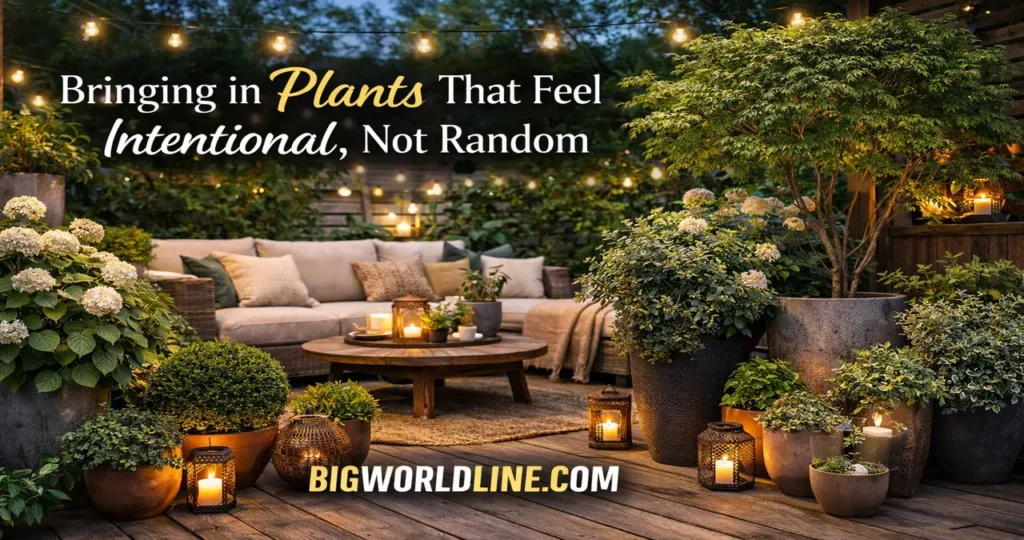
Plants are often the feature that turns a patio from acceptable to memorable. They add life, color, movement, privacy, and freshness. They can soften hard edges, connect the patio to the garden, and make the whole setting feel more welcoming. But there is a big difference between a patio that includes thoughtfully placed greenery and one that just has a few scattered pots.
Start by thinking about plant roles. Some plants define edges. Some create privacy. Some soften corners. Some draw the eye upward. Some simply add lushness and color. When every plant has a role, the arrangement feels designed. When plants are chosen randomly without considering scale or placement, the patio can look messy.
Planter choice matters almost as much as the plants themselves. Containers should relate to the style of the patio. Large matte pots can feel modern and grounded. Terracotta brings warmth and timeless character. Woven baskets used in protected areas can create a relaxed look. Repeating similar planters in different sizes often creates a more sophisticated effect than mixing too many unrelated styles.
It is also smart to think in layers. Use larger plants to anchor, medium plants to fill, and trailing plants to soften edges. Vary leaf shape and plant height for visual interest. Keep maintenance realistic. A patio full of plants only works if you can care for them consistently. It is better to have fewer healthy, well-placed plants than a crowded collection that quickly declines.
If your goal is how to renovate my patio decoradhouse in a way that feels elevated, greenery should be integrated into the design language from the beginning. Plants are not accessories added at the end. They are part of the architecture of the space. They guide the eye, frame seating, and bring emotional warmth that no hard material can fully replace.
Making Outdoor Lighting Feel Warm and Useful
Lighting is often the detail that determines whether a patio gets used after sunset. During the day, a space may look complete, but without proper evening lighting, it can become flat, dim, or impractical. Good patio lighting creates comfort, visibility, and atmosphere all at once.
The best lighting schemes are layered. Overhead lighting can provide general illumination, but it should not be the only source. Wall lights, lanterns, floor lamps designed for outdoors, string lighting, recessed lighting, and candle-style elements all add dimension. Combining different light sources creates a softer and more inviting effect than relying on one harsh fixture.
Warm light tends to work best for patios because it feels relaxed and flattering. Bright white light can make the space feel sterile or overly exposed. Aim for lighting that supports conversation, movement, and mood. Dining areas may need slightly more brightness, while lounge corners benefit from a softer glow. Pathways and steps should be lit clearly for safety without overwhelming the atmosphere.
Decorative lighting can also serve as a design statement. Lanterns grouped in a corner, pendant lights under a covered patio, or subtle uplighting around plants can all elevate the space. The goal is to create evening character, not just brightness. This is an essential part of how to renovate my patio decoradhouse, because a truly successful patio should feel beautiful both in daylight and after dark.
Adding Privacy Without Closing the Space Off
Privacy is one of the most common concerns in patio design, especially in neighborhoods where homes are close together. A patio may be beautifully furnished, but if it feels exposed to every nearby window or passing glance, it can still feel uncomfortable. Privacy does not always require a tall wall. Often, it is achieved through softer, more thoughtful methods.
Screens, trellises, slatted wood panels, and outdoor curtains can all create privacy while preserving airiness. These elements also help define zones and add visual interest. A slatted screen can feel architectural and modern. A trellis with climbing greenery can feel romantic and organic. Curtains can create softness and flexibility, especially in lounge areas or covered patios.
Plants are one of the most attractive privacy tools. Tall planters with grasses, bamboo alternatives, shrubs, or layered greenery can create filtered screening that feels natural rather than defensive. The advantage of plant-based privacy is that it softens the patio while also improving the visual connection to nature.
The smartest privacy solutions match the overall style of the renovation. If you are working through how to renovate my patio decoradhouse, privacy should feel like part of the design vocabulary rather than a separate problem to hide. The most successful patios manage to feel sheltered without feeling boxed in. That balance is where outdoor comfort really begins.
Connecting the Patio to the Interior of the Home
One of the easiest ways to make a patio feel polished is to design it as a continuation of the indoor style. When the patio has no connection to the rest of the home, it can feel like a completely separate project. But when materials, tones, and mood flow naturally from inside to outside, the whole property feels more cohesive.
You do not need identical furniture or exact color matching. What matters is visual relationship. If your interior is warm, relaxed, and layered, the patio should not suddenly become icy and ultra-industrial. If your indoor style is minimal and clean, the patio should not be full of chaotic patterns and overly ornate pieces. Continuity creates calm.
Pay attention to sightlines from inside the home. What do you see through the doors or windows? The patio should look appealing from indoors, not just when you stand on it. That might mean centering a seating area, placing a large planter where the eye naturally lands, or choosing an outdoor rug that frames the view. Small design decisions can dramatically improve the way the patio reads from inside.
This indoor-outdoor connection is a major part of how to renovate my patio decoradhouse in a design-forward way. The patio should feel like the home continues into the open air. That sense of continuity makes the renovation feel more refined, more intentional, and more valuable overall.
Styling the Patio So It Feels Finished
Styling is the phase where the patio begins to feel personal. Structure, layout, furniture, and shade create the base, but styling is what gives the space identity. It is where the patio becomes warmer, more expressive, and more complete. At the same time, styling is where many people overdo things. The goal is not to crowd the patio. It is to finish it with clarity.
Start with foundational styling pieces. An outdoor rug can unify a seating area and make the layout feel grounded. Cushions add softness and color. A throw blanket can make the space feel more inviting in the evening. A tray on a table can hold candles, drinks, or small decor in a way that feels organized rather than cluttered.
Then add a few stronger decorative elements. Pottery, lanterns, sculptural planters, a side table with character, or a statement outdoor mirror on a protected wall can all contribute to the look. These pieces should support the overall mood rather than compete with it. Repetition in materials or color helps the styling feel composed.
Less is usually better. A patio should still feel breathable. Every item should either serve a purpose or contribute meaningful visual value. This is where people exploring how to renovate my patio decoradhouse often find the difference between average styling and expert styling. Experts know when to stop. The most beautiful patios feel edited, not overloaded.
Choosing Decor That Can Handle Real Outdoor Life
Outdoor beauty must survive outdoor conditions. This is where many patio renovations lose their appeal over time. Cushions fade, wood stains, metal rusts, rugs deteriorate, and decorative pieces become shabby. That does not mean you have to choose ugly, overly practical items. It means you need to choose attractive items that are made to last.
Look for weather-resistant fabrics, finishes, and construction. Outdoor textiles should be designed to handle light, moisture, and regular use. Furniture frames should resist rust or be properly protected. Wood should be suitable for exterior conditions or treated appropriately. Rugs should be made for outdoor exposure and easy maintenance.
Storage also plays a role in durability. Even excellent outdoor products last longer when they are cared for. Cushion boxes, covered storage benches, and seasonal protection make a big difference. A stylish patio does not require constant replacement. It requires smart buying and realistic maintenance habits.
A strong answer to how to renovate my patio decoradhouse always includes durability. Design is not just about the reveal moment. It is about how the space continues to perform month after month. The most successful patios age gracefully because the choices behind them were thoughtful from the start.
Creating a Cozy Atmosphere Without Making It Feel Small

Coziness is one of the most desirable qualities in a patio, but it needs to be handled carefully. Cozy should mean inviting, layered, and comfortable. It should not mean crowded, dark, or overfilled. The trick is to create intimacy while preserving enough openness for movement and visual ease.
Use grouping to your advantage. Furniture arranged closer together feels more conversational and warm than furniture spread too far apart. Rugs help define the area and reduce the sense of emptiness. Cushions and throws soften the edges of furniture and make the patio feel more lived in. Soft lighting adds evening warmth without physically taking up much room.
Vertical elements can also create coziness. Hanging lights, climbing greenery, tall planters, or a pergola can make the patio feel more enclosed in a positive way. At the same time, maintain breathing space. Not every corner needs an object. Empty space helps the patio feel intentional and calm.
If your focus is how to renovate my patio decoradhouse for daily enjoyment, coziness should be one of your top goals. People return to spaces that make them feel comfortable. They avoid spaces that look nice but feel emotionally cold. Cozy design is not about excess. It is about emotional warmth supported by thoughtful details.
Balancing Trends With Timeless Style
Outdoor design trends can be inspiring, but they should never control the entire renovation. Trends move quickly. A patio takes effort and money to create, so it should still feel good to you long after specific styles lose momentum. The best approach is to build a timeless foundation and use trends in smaller, flexible ways.
Timeless elements usually include neutral or earthy foundational tones, durable materials, classic shapes, and a layout based on function rather than novelty. A strong table, comfortable seating, quality lighting, attractive planters, and balanced greenery will almost always age better than highly theme-driven design choices.
That does not mean your patio should feel boring. Trend-aware accents can bring freshness. A current color, a contemporary planter silhouette, a modern patterned cushion, or a stylish lantern can keep the space feeling current. The key is that these accents can be updated without requiring a full redesign.
This mindset is especially useful when planning how to renovate my patio decoradhouse. A decor-conscious patio should feel stylish, but not trapped in a passing moment. Design maturity comes from knowing where to invest in lasting choices and where to have a little fun with changeable details.
Budgeting Smartly Without Losing Design Quality
A beautiful patio does not require unlimited money, but it does require clear priorities. Budget problems often happen when people spend too much on things that do not matter and too little on the elements that do. Smart budgeting is less about going cheap and more about spending intentionally.
Begin with the structural and functional needs. If the surface is damaged, drainage is poor, or shade is missing, those issues should come before decorative upgrades. There is no point in buying elegant cushions if the patio itself feels uncomfortable or unfinished. After the essentials, focus on anchor pieces such as seating, a dining setup, or a major rug.
Decorative layers can be added more gradually. That is one of the benefits of patio design. Once the foundation is right, the finishing touches can evolve over time. You can start with strong basics and add more styling as the budget allows. In fact, this often leads to better results because it keeps the patio from looking overbought and underdesigned.
Here is a simple way to think about spending priorities:
| Patio Element | Why It Matters | Smart Budget Approach |
|---|---|---|
| Surface and repairs | Supports safety, function, and appearance | Spend early here if needed |
| Shade solution | Improves comfort and daily usability | Choose the best option your space can support |
| Seating | Determines whether the patio is truly usable | Invest in comfort and durability |
| Lighting | Extends use into evening and shapes mood | Layer affordable sources thoughtfully |
| Rugs and textiles | Add softness and style | Save here if necessary, but do not ignore them |
| Plants and planters | Bring life and privacy | Mix statement pieces with simple fillers |
| Decor accents | Complete the look | Add gradually for a more curated feel |
A practical answer to how to renovate my patio decoradhouse should never ignore budget. Great design is not about spending the most. It is about understanding what creates the biggest impact and allocating resources where they matter most.
Small Patio Renovation Ideas That Still Feel Luxurious
A small patio is not a limitation in the way many people assume. In fact, smaller patios can become incredibly charming because they naturally encourage intimacy. The challenge is not size itself. The challenge is choosing the right scale, reducing clutter, and making every element count.
Use compact furniture with clean lines and visible legs to keep the space feeling open. Foldable or stackable pieces can be useful if flexibility matters. Built-in benches can save space while also adding structure. A small bistro setup, a pair of lounge chairs with a shared side table, or a narrow dining arrangement can all work beautifully when planned carefully.
Mirrors, vertical greenery, layered lighting, and a clear color palette can help a small patio feel more expansive and polished. Large planters used sparingly often work better than many tiny pots. A single outdoor rug can make the space feel intentionally designed rather than pieced together. Wall-mounted decor or hanging planters can add personality without taking up floor area.
If you are searching for how to renovate my patio decoradhouse and your patio is compact, do not chase the look of a huge outdoor resort. Instead, aim for refinement, comfort, and detail. Small spaces become luxurious when every choice feels careful and every inch feels considered.
Larger Patio Spaces and How to Keep Them From Feeling Empty
Large patios come with their own design challenge. Instead of feeling cramped, they can feel disconnected or unfinished if the space is not organized properly. The solution is to create zones that give the patio structure and purpose.
A lounge zone, dining zone, and planting or transition zone can work together beautifully. Each area should have enough identity to feel intentional while still connecting visually to the others. Rugs are useful for this. So are lighting groupings, planter clusters, and subtle shifts in furniture style or arrangement.
Scale is especially important in large spaces. Tiny furniture can look lost, and scattered pieces can make the patio feel like a showroom rather than a place to live. Larger seating groupings, long tables, statement planters, and stronger overhead elements can help hold the space together.
The best interpretation of how to renovate my patio decoradhouse in a large setting is to think like an outdoor interior designer. You are not just decorating a surface. You are shaping experiences across multiple zones. Once the patio is broken into intentional areas, the whole space feels more welcoming and more complete.
Seasonal Flexibility and Why It Improves Long-Term Satisfaction
A patio renovation becomes more valuable when it can adapt to different times of year. Even if the climate shifts significantly, the patio should still feel usable, attractive, and easy to adjust. Seasonal flexibility does not require constant redecorating. It simply means building in options.
Textiles are one of the easiest seasonal tools. Lightweight cushions and airy fabrics can feel fresh in warm months, while richer throws and softer textures can make the same patio feel cozy during cooler weather. Lighting becomes especially important in seasons when evenings come earlier. Shade may matter more in hot periods, while warmth and shelter matter more when temperatures drop.
Plants can also support seasonal interest. Choosing greenery with varying forms, blooms, or foliage changes can help the patio feel alive throughout the year. Decorative accents can shift subtly as well. You do not need to reinvent the patio, just refresh it in ways that keep it emotionally current.
When asking how to renovate my patio decoradhouse, it helps to think beyond the first reveal. The patio should continue to serve you through change. A flexible patio feels more satisfying because it remains relevant instead of becoming stale after one season.
Common Patio Renovation Mistakes to Avoid
Many patio problems come from good intentions paired with poor planning. People buy too much furniture, choose materials that do not last, ignore sun patterns, forget lighting, or decorate without understanding how the space functions. These mistakes are common, but they are also avoidable.
One of the biggest mistakes is prioritizing appearance over comfort. A patio must feel good to use. Another mistake is ignoring proportion. Furniture that is too large or too small disrupts the whole space. Poor lighting, weak shade, and random decor choices can also prevent the patio from feeling finished.
Another issue is lack of cohesion. A patio filled with individually attractive items can still look wrong when there is no common thread between them. Style needs rhythm. Materials, colors, and shapes should relate to one another. Maintenance should also be considered. A patio that looks beautiful for a week and frustrating after that is not truly successful.
For homeowners trying to master how to renovate my patio decoradhouse, avoiding mistakes is just as important as making good choices. Design improvement often comes from restraint, clarity, and consistency more than from buying more things.
The Emotional Side of Renovating an Outdoor Space
There is a reason patio renovations often feel so rewarding. Outdoor spaces connect deeply with mood and daily rhythm. A renovated patio can change how mornings begin, how evenings end, and how time with family or friends is experienced. It can provide calm in a busy schedule and beauty in ordinary routines.
Unlike many indoor rooms, patios bring together comfort and fresh air in a way that feels restorative. They invite slower moments. They support solitude without isolation. They give people a place to pause. This emotional value is often the real reason someone begins looking into how to renovate my patio decoradhouse. The patio is not just a project. It is a chance to improve the feeling of home itself.
That is why thoughtful renovation matters. When design is aligned with real life, the patio becomes more than an upgraded space. It becomes part of your routine, part of your lifestyle, and part of how you enjoy your home. That emotional return is often greater than the financial cost.
Final Thoughts on Creating a Patio That Truly Feels Yours
The most beautiful patios are not the ones with the most expensive furniture or the trendiest decor. They are the ones that feel deeply considered. They work well. They look balanced. They feel comfortable at different times of day. They reflect the people who use them. A successful patio is practical, personal, and visually cohesive all at once.
If you have been searching for how to renovate my patio decoradhouse, the answer is not a single product or one dramatic change. It is a process of improving the space layer by layer. Start with the condition of the patio. Define its purpose. Build a strong layout. Choose durable materials. Add comfort, color, texture, plants, lighting, and privacy with intention. Then style the space in a way that feels finished but never forced.
When you approach your patio with that level of thought, the result is more than a renovation. It becomes an outdoor retreat that feels like it truly belongs to your home and to your life.
FAQs About How to Renovate My Patio Decoradhouse
What is the first step in how to renovate my patio decoradhouse?
The first step is to assess the patio honestly. Look at the condition of the floor, drainage, shade, walls, seating space, and overall flow. Before choosing decor, you need to understand what is working and what is not. A strong renovation begins with function, not shopping.
Once you know the real condition of the patio, define how you want to use it. That purpose will shape every design decision afterward. A dining patio, lounge patio, and plant-focused retreat all require different layouts and priorities.
How do I make my patio look expensive without overspending?
Focus on a cohesive palette, comfortable seating, good lighting, and a few larger statement elements instead of many small random items. A large rug, matching planters, layered cushions, and warm lighting can elevate the space dramatically.
Avoid clutter and choose decor that looks intentional. Even affordable patios can feel luxurious when the layout is clean, the materials relate well, and the accessories are edited carefully.
Which colors work best for a patio renovation?
Earthy neutrals, soft whites, warm grays, olive, terracotta, sand, charcoal, and muted blues tend to work beautifully outdoors. These shades feel grounded and natural, which helps the patio blend with the environment.
The best color palette depends on your home’s exterior and the mood you want. It is usually smartest to keep the base calm and bring in stronger color through smaller accents that are easier to update.
How important are plants in patio design?
Plants are extremely important because they soften hard edges, add texture, bring life to the patio, and can even improve privacy. A patio without greenery often feels incomplete unless it is intentionally ultra-minimal.
The key is to place plants with purpose. Use large plants to anchor areas, medium plants to fill visual gaps, and trailing greenery to soften edges. Planters should also suit the overall style of the renovation.
What type of furniture should I choose for my patio?
Choose furniture based on comfort, scale, weather resistance, and how you plan to use the space. Deep seating works well for lounging, while more upright seating is better for dining or conversation-focused arrangements.
Avoid buying furniture just because it looks stylish online. The best patio furniture supports real use, fits the patio properly, and feels connected to the style of the home.
How can I renovate a small patio without making it feel crowded?
Use fewer, better pieces. Pick compact furniture with clean lines, preserve walking space, and use vertical elements like wall planters or hanging lights instead of filling the floor with decor.
A small patio can feel luxurious when the layout is clear, the palette is cohesive, and the styling is intentional. Small spaces benefit greatly from simplicity and strong editing.
Do I need an outdoor rug on my patio?
You do not absolutely need one, but an outdoor rug is one of the most effective tools for making a patio feel finished. It helps define zones, soften hard surfaces, and visually connect furniture pieces.
If you use one, make sure it is made for outdoor conditions and sized correctly. A rug that is too small can make the furniture arrangement feel awkward rather than polished.
How do I make my patio usable in the evening?
Layer your lighting. Use a mix of overhead lighting, lanterns, wall lights, candles, or string lights to create both visibility and mood. Warm lighting tends to feel more inviting than bright white lighting.
Comfort also matters in the evening. Add throws, soft cushions, and perhaps a fire feature or sheltered area if the climate supports it. Evening usability comes from atmosphere as much as function.
Conclusion
A smart patio renovation is never just about decoration. It is about creating an outdoor space that feels beautiful, comfortable, and worth using every day. If your goal is to master how to renovate my patio decoradhouse, focus on purpose, layout, durability, warmth, and personal style. When those elements come together, your patio stops feeling like extra space and starts feeling like one of the best parts of your home.